Sunday, 19 August 2018

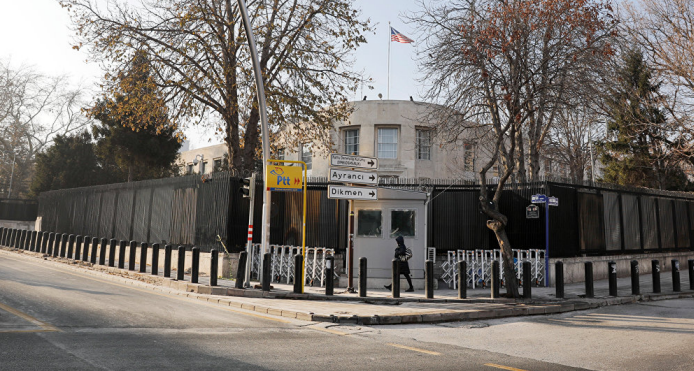
Gunshots fired at the US embassy in Ankara, according to CNN Turk

The incident was said to occur at around 0200 GMT. Several gunshots were fired from a vehicle at the US embassy. The shots hit a window in a security post but there were no casualties, thankfully.

The assailants are said to have fled in a white car after the attack. This of course coincides with the ongoing tensions between US and Turkey on the release of US pastor Brunson - which still doesn't look like it's going to be resolved any time soon.

Tuesday, 14 August 2018

Trading psychology: Avoiding common traps in your trading

How to avoid mental pitfalls

Trading is a high-performance activity and, like all high-performance pursuits, the mental element of how you approach your trading is extremely important. Ironically, it is also easy to overlook with many novice traders seeing it as an irrelevant part of their trading.
However, trading psychology mustn't be ignored since our state of mind affects how we trade. This article will consider five of the most common trading challenges that people face and offer some solutions for addressing them.
Fear of missing out
This trap is when we see a currency move that has already taken place and we feel that we just have to be part of it. It may have been a central bank who changed their forward guidance and the market is pricing in a fundamental shift for their currency. The price has moved 300 points and, impulsively, we might simply enter a position in order to avoid missing out.
We then have to watch as price endures a 150 point draw down and we have capital unnecessarily tied into a position that is in the red. A couple of days later we may be angry that we were not patient enough to wait for a pullback and get a far better price.
Becoming more aggressive after losing trades
You have just lost your third trade in a row. You are furious. Your instant reaction is revenge. Of course, you may not see it like that, but that is what you want. Your heartbeat has increased. You feel angry. An aggressive response leads to a hastily planned trade, entered quickly and spontaneously, which in turn may lead to further unnecessary losses.
Moving your stop loss
You have had a good run recently and made steady profits. Then you enter a trade and it starts to approach your stop loss. You don't want to take the dent to your trading record, so you move your stop loss out further than you planned.
Price moves again and does not reverse, so you move your stop loss again; surely price will reverse soon. All your profit from your good run has now been erased and you are desperate for a reversal. It never comes, and you take a large, and unnecessary, hit to your account.
Failure to take a trade because you lost the last three trades
You have lost the last three trades and you are feeling low. A good set up comes along, the technicals and the fundamentals are perfect and this is exactly the sort of trade for you to take. However, you let it pass. You then see the trade soar to make hundreds of points. You couldn't pull the trigger because you were still feeling low after a string of losses.
Jumping in to trades on market moves
You are at the charts and the EUR/USD chart suddenly moves 70 points for no reason. There is nothing on the news feeds to explain the move. However, you jump in to the trade and as soon as you do price reverses all the way back to the price it was at before the unexplained move.
The only difference is that you either have a losing trader or are sat in 50+ points of drawdown. When you look at the positon you know that you entered for no other reason than you saw the market move. You now have a 50+ points mistake to erase before you start making profits again. Impulsive, unplanned and completely unnecessary.
It can be easy to feel that you are the only one making these mistakes and that maybe you are just not cut out for trading. However, these traps are common for all traders and they all come from having the wrong mindset. Here are three things you can do to help yourself develop a correct mindset.
Don't over leverage.
Not over leveraging allows a trader to think calmly and logically. One of the major impacts of using leverage is that it is very hard to think unemotionally when you are risking large percentages of your account.
A certain aspect of successful trading requires a detachment from a trade and not over managing it. If you are using high levels of leverage, then you will find it much harder to keep an emotional detachment to your trades. You are far more likely to intervene and mismanage a trade.
Get a mentor
Trading for many people is a lonely activity. Yes, there are internet forums, but sometimes they are dominated by over bearing personalities who are unhelpful. It can be hard to assess who you are speaking to on a forum and whether their advice is good or not.
By getting a mentor, with a bona-fide track record, you will know that their advice is worth listening to. You can also talk through your trades with them and you will find that they have solutions for some of the emotions that you have been experiencing.
Keep a journal
By keeping a journal, you can review your trades. Why did you enter that trade? Would you do that again? If not, why not? Use your mistakes to work for you and not against you. Take a break on the weekend, grab a coffee and review last week's trades. Let them be points of learning as you review and adjust your mindset.

By doing these three things above, over time, your mistakes will become less frequent. Finally, don't be overly hard on yourself for your trading losses due to your emotions since they are a normal part of the learning curve for a trader.
It would be more unusual for you to not experience them than to have an innate and complete mental mastery over your trading. Trading is a high-performance activity and a business, so it should be approached as such.

Sunday, 12 August 2018

What’s Next for Iran, the Iranian Rial and the Ayatollah?

The Iranian economy is in tatters, the Iranian Rial has collapsed to record lows against the U.S Dollar, most of the collapse coming through the summer over the planned roll-out of sanctions in August and inflation is sky high as once optimistic businesses face the prospects of another eternity in the wilderness. How close the Iranian economy to an economic crisis?


What’s Next for Iran
As U.S mid-term elections approach, the U.S President has been a particularly busy one by historical standards. The trade war with China, an apparent denuclearization agreement with North Korea, an about turn on relations with Russia, trade renegotiations with the EU, ongoing talks with Mexico and Canada and fresh sanctions on Iran being joined by the latest economic attack on Erdogan and Turkey.
While the past week saw the markets balk at the latest Trump move to free Pastor Brunson, there may be a greater game afoot.

Sanctions on Iran

Enemy number one for the U.S President has been Iran and chastising the hard-fought nuclear agreement during the presidential election campaign, which was an early warning sign that things were going to change and change they have.
Solidarity on Iran sanctions in the past had left Iran with very little wriggle room, but things have changed and that’s down to Trump’s clear intention to just ruffle the feathers of anyone and everyone in the apparent interests of the U.S.
It’s been 2-years since sanctions were lifted and Iran reentered the global arena, with Western companies eager to get a piece of Iran’s oil Dollars.
Things haven’t quite panned out the way the Iranian regime would have hoped, with the U.S President finally refusing to ratify the nuclear agreement that ultimately led to last week’s introduction of fresh sanctions.
While Iran may have quite comfortably moved on in life with the knowledge that it would be doing little to no business with the U.S, the U.S administration’s warning to both allies and foes of punitive sanctions on any country doing business with Iran has weighed on the Iranian’s economy with a November target date of zero oil imports for any nation an alarming one, for Iran at least.
Of greater concern for Iran’s heads of states will have been the ongoing trade war and Trump’s willingness to hit any nation with tariffs irrespective of historic ties.
For Iran, there are hidden dangers, but even more so for the regime that has been in power since 1979 and, while the EU and other global powers protest against the latest move by the U.S, Trump’s strategy will likely have one of two outcomes, one likely to be considered hugely positive for the U.S and the other, a disaster all around.

Is Iran Heading for an Economic Crisis?

The Iranian economy is in tatters, the Iranian Rial has collapsed to record lows against the U.S Dollar, most of the collapse coming through the summer over the planned roll-out of sanctions in August and inflation is sky high as once optimistic businesses face the prospects of another eternity in the wilderness.
Last time around the impact of sanctions was amidst a grueling war that cost Iran and neighboring Iraq a million lives. This time around, there is no war, just global economic growth, and prosperity for those sitting on the right side of the fence.
Reports of 100,000 protestors hitting the streets of Iran in the wake of the latest sanctions, calling for the death to a dictator, this time their very one, spells trouble. Unemployment, a reported 50% rise in the cost of fruit and vegetables and a 50% slide in the value of the Rial against the Dollar are the aftershocks of the U.S sanctions and what the U.S administration will likely be hoping to be the final nails in the regime’s coffin.
To make matters worse and certainly generate more anger on the streets of Tehran is the knowledge that oil prices have recovered to $70 plus levels a barrel and the Iranian government has enjoyed oil Dollar revenues and money from foreign investment for over 2-years, with a continued devaluation in the Rial since late 2013. The Rial has tumbled from IRR12,000 levels against the Dollar to IRR44,000 levels at the time of writing. Government exchange rates are not the rates that are available to the Iranian population, however, with unofficial numbers seeing 1 Dollar buying as much as IRR112,000, according to figures reported over the last few weeks.
The divergence between the official and street value of the Iranian Rial is all too clear for the Iranian people to see. While the official Rial has fallen from IRR36,000 levels to IRR44,000 levels this year, the street value has fallen from IRR44,000 levels to over IRR110,000 levels year-to-date, with plunge starting back in April.
Unsurprisingly, official inflation figures and implied annual inflation figures have also seen a material divergence, with street vendors racking up prices to meet with rising costs and the falling street value of the Rial.
As at the end of July, the implied annual rate of inflation was reported to have been sitting at over 200%, while the official inflation rate was reported to be sitting at just over 10%, the divergence in official and implied kicking in from January and accelerating as the year progressed.

Suggested Articles

What’s Next for Iran?

Sanctions on Iran’s oil industry don’t hit until November and already the country is in collapse and the Islamic regime has moved into close quarters, with even moderate Rouhani taking the cover of Supreme Spiritual Leader Ayatollah Ali Khamenei.
Moderate leader Rouhani’s return to the fold will likely anger the streets even more and with just a number of months remaining until oil sanctions hit, the Iranian regime’s only real choice is to hit the negotiating table and that goes against the very ethos of the spiritual leader’s stance on the U.S.
The alternative is to fight off a revolution domestically and further suppress the more vocal, while searching for ways to halt the slide in the Rial and address inflation, neither of which are going to be possible until Iran revises its current currency position and looks for an appropriate peg and more importantly, addresses the sanctions issue.
Does the West want another Iranian revolution and what would that mean to the current dynamics in the Middle East and ultimately on the price of crude oil?
Iran has played a meddlesome role in the Middle East and a domestic power struggle would certainly place it at risk of war, even with a Western appointed interim government or return of the exiled crown prince of Iran and son of the former Shah, Reza Pahlavi, who has been in talks with Israel and other enemies of the current regime for their support in a bid to return Iran to a monarchy.
Either way, it’s going to be a painful time and, the direction of the Rial will ultimately come down to stability in the coming months, continued unrest and a threat of a revolution likely to see further decline before steadying, while a return of Reza Pahlavi could lead to an immediate rally as the markets consider the likely close ties with the West and most importantly, the U.S.
For crude oil and possible supply disruption, it will ultimately boil down to how the current regime handles sanctions and whether the revolutionary guards fall back into the old habit of disrupting supply through the Strait of Hormuz. The current U.S President is unlikely to accept such antics, which could see the Islamic Republic face sterner action from the U.S and, for Trump the incentive would be to topple the regime. What a coup that would be…
Thursday, 9 August 2018

Dollar on Pick

A Reuters News, Asian stock markets fell on Friday despite signs of greater government support for firms in China, with global trade tensions clouding the outlook for demand.
The U.S. dollar was near its highest levels in 13 months, while concerns over disputes with Washington pushed the Turkish lira to record lows and piled pressure on the Russian rouble.
U.S. President Donald Trump is pushing Tokyo to sign a free-trade agreement and has threatened to impose higher tariffs on auto imports including those from Japan.
Australian shares were flat after the nation’s central bank left growth forecasts largely unchanged, but trimmed its near-term estimates for inflation.
U.S. Treasury yields also fell, with the yield on benchmark 10-year Treasury notes at 2.9276 percent compared with 2.935 percent at its U.S. close.
UK GDP report will be in market interest further due to be release 0930 GMT.

Top 5 News Inside Forex Market On Thursday

Major Event Inside Forex market Today.
Raj Kumar Gupta Financial Analyst at ABFX
Loonie Hit The Ground
CAD leads the Forex market against its peers. The currency performed highest against NZD, 1.33% Up.
The long-term economic outlook stable in June, Canada’s merchandise trade deficit with the world narrowed from $2.7 billion in May to $626 million in June, the smallest deficit since January 2017, as the report released Aug 3rd 2018.
NAFTA trade optimism rising on the market as USA has shown a positive move on trade talks after EU meeting. Today’s main event to take place in Washington, where Japan will enter talks seeking to avert steep tariffs on its car export.
Overall CAD has bullish against NZD, JPY, AUD for the long term.
Washington on focus, Japan Hold First Bilateral Trade Talks
USD remains stable in the currency market, however, the rising rally limited ahead as the Japan-USA trade talks considered as the main event on Thursday and U.S. President Trump Trade Representative Robert Lighthizer and Japanese Economy Minister Toshimitsu Motegi, will be leading a new framework to discuss on “free, fair and reciprocal” trade.
Another major event pending with fresh USA sanction on, for its role in the poisoning of a former security agent in the U.K. as well as an ongoing U.S.-Turkey human rights dispute.
Another side, Unemployment claim support the currency, decline 213K whereas the Producer Price Index for final demand was unchanged in July, seasonally adjusted, the U.S. Bureau of Labor Statistics reported today.
Overall USD has bullish against GBP, CAD, EUR, NZD for the long term.
Gold bounce as dollar steady
Gold bounce ahead on slowing move on USD, Priceline hover near $1214.6 0100 GMT.
However, the long-term outlook remains widely limited as the US trade talks and Russia freash sanction will be supporting the currency. The dollar really has expected to continue more as Economic outlook favours the currency. USA GDP report had shown a growth of 4.1%, highest pace of growth in 4 years and FED hawkish overview in economic continue the currency higher. Gold consider as dollar dominated asset and the expensive dollar price reduces the value of gold.
US dollar index $95.25, +0.21% Up on Wednesday closing bell.
Overall XAU has bullish against NZD, GBP and bearish against USD, CAD for the long term.
Crude Oil Market Remains In Gain
Oil price steady on Thursday, As USA sanction on Iran, came into effect. Priceline widely stable despite China crude oil imports narrowed in June. Iran sanction and Crude oil inventory report offset the China imports fall effect.
The renewed sanctions will not directly target Iranian oil until November, although U.S. President Donald Trump has said he wants as many countries as possible to cut their imports of Iranian crude to zero. Iran is the third-biggest producer in the Organization of the Petroleum Exporting Countries.
Overall Crude oil has bullish against USD for short term.
Kiwi struggle on Thursday
NZD struggle on today, Also, the exchange rate seen highest against CAD during London session. The reserve bank of New Zealand remains the official cash rate at 1.75 %. Also, provide the clue that the value remains to be same more than projected in the last meeting.
NZD official said the direction of our next official cash rate (OCR) move could be up or down. While recent economic growth has moderated, we expect it to pick up pace over the rest of this year and be maintained through 2019.
The dovis speech pulls the currency lower. The domestic growth of business investment, supported by low-interest rates.
Overall NZD has bearish trend against GBP, CHF, CAD, USD for the long term.